The Intersection of Digital Networks (Internet) and Heavy-Duty Propulsion (Diesel)
In the modern theater of global industry, logistics, and communication, two distinct pillars sustain human civilization: the Internet and diesel technology. While they appear to exist in entirely separate realms—one a digital web of packets, fiber optics, and virtual spaces, and the other a heavy hydrocarbon fuel driving compression-ignition mechanical engines—they are fundamentally interdependent.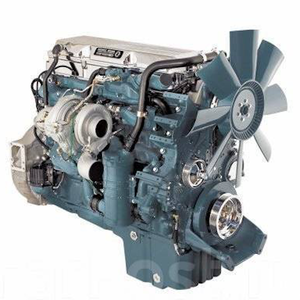
To understand the contemporary world is to recognize that digital connectivity cannot exist without physical infrastructure, and heavy mechanical logistics cannot scale without digital optimization. This comprehensive analysis explores the historical evolution, operational mechanics, economic symbiosis, environmental challenges, and future trajectories of the internet and diesel technology.
Part I: The Architecture of the Internet — Connecting the Globe
Origins and Evolution
The genesis of the internet traces back to the Cold War-era research projects funded by the United States Department of Defense, specifically the Advanced Research Projects Agency Network (ARPANET). Conceived in the late 1960s, ARPANET sought to create a robust, fault-tolerant communication network that could withstand partial node failures.
By standardizing communication protocols—most notably the Transmission Control Protocol and Internet Protocol (TCP/IP) developed by Vinton Cerf and Robert Kahn in the 1970s—computers across disparate architectures could finally converse seamlessly.
Throughout the late 20th century, the network transitioned from an academic and military sandbox into the commercial World Wide Web, championed by Tim Berners-Lee in 1989. The shift from dial-up copper wires to broadband, fiber optics, and mobile 4G/5G networks transformed the internet from a static information repository into a dynamic, omnipresent utility governing global commerce, social interaction, and governance.
Core Components of Modern Digital Infrastructure
Far from being an abstract "cloud," the internet is a heavily material, physical construct. It relies upon:
Submarine and Terrestrial Fiber-Optic Cables: Glass strands transmitting data globally at the speed of light using light pulses.
Data Centers and Server Farms: Massive warehouses filled with servers that process, compute, and store the petabytes of information generated daily.
Internet Service Providers (ISPs) and Exchange Points: Routing architectures that direct traffic from source to destination across autonomous systems.
End-User Hardware: Smartphones, laptops, IoT sensors, and industrial automation terminals.
Part II: The Mechanics and Legacy of Diesel Power
The Engine and the Fuel
Invented by German mechanical engineer Rudolf Diesel in the late 19th century, the diesel engine operates on the principle of compression ignition. Unlike gasoline engines that rely on spark plugs to ignite a fuel-air mixture, diesel engines compress inlet air to such high pressures and temperatures that the atomized fuel spontaneously ignites upon injection.
Diesel fuel—a fractional distillate of petroleum containing heavier hydrocarbon chains—delivers superior volumetric energy density compared to gasoline. This high thermal efficiency made it the undisputed champion for heavy-duty applications.
The Backbone of Heavy Industry
Diesel technology became the literal engine of the 20th and 21st-century industrial economy. Its primary domains include:
Freight and Logistics: Long-haul semi-trucks, cargo shipping vessels, and freight locomotives that move raw materials and consumer goods across continents.
Agriculture: Heavy tractors, combine harvesters, and irrigation systems relied upon for global food security.
Backup and Critical Power Generation: Standby diesel generators that ensure uninterrupted uptime for hospitals, data centers, and telecommunication switches during grid failures.
Construction and Mining: Earthmoving equipment, excavators, and cranes operating in remote environments where electrical grid infrastructure is absent.
Part III: The Symbiotic Relationship — Where Internet Meets Diesel
While digital data and petroleum fuel seem worlds apart, the modern economy functions entirely through their intersection. Without diesel, the physical infrastructure of the internet collapses; without the internet, modern diesel supply chains grind to a halt.
+-------------------------------------------------------------+
               THE CYBER-PHYSICAL INDUSTRIAL LOOP
+-------------------------------------------------------------+
  [ Internet & Cloud Data ]        [ Diesel Supply Chains ]
            │                                  │
            ▼                                  ▼
   Route Optimization,             Powers Data Centers &
  IoT Fleet Telematics,           Transports Hardware via
   & Automated Logistics               Cargo & Trucks
            │                                  │
            └──────────────► ◄─────────────────┘
                           Result:
               Global Economic Synchronization
1. Data Centers and Emergency Backup Generation
The internet runs on continuous electricity. Data centers operated by hyperscalers (such as Amazon Web Services, Microsoft Azure, and Google Cloud) require uninterrupted power 24 hours a day, 365 days a year.
Even a momentary drop in grid power can corrupt vast swathes of data and crash localized digital services. Consequently, virtually every major data center on Earth relies on massive, high-capacity diesel generators standing by in automated readiness. If utility power fails, these diesel engines spin up within seconds, sustaining the internet’s physical nervous system until grid stability returns.
2. Fleet Telematics and Smart Logistics
The movement of diesel-powered commercial fleets is now entirely orchestrated by the internet. Modern supply chains utilize Internet of Things (IoT) sensors, GPS tracking, and cloud-based route optimization algorithms to manage fuel efficiency, predict engine maintenance, and monitor driver behavior.
Real-time tracking: Fleet managers use web dashboards to track fuel consumption and emissions across thousands of diesel trucks.
Algorithmic routing: Internet-connected navigation systems redirect freight trucks away from traffic congestion, conserving millions of gallons of diesel fuel annually.
3. Supply Chain Integrity for Tech Hardware
The expansion of the internet requires physical infrastructure—silicon chips, server racks, fiber-optic cables, and tower components. This hardware is manufactured in specialized facilities and transported globally via diesel-powered container ships, trains, and semi-trailer trucks. The digital economy cannot scale up its physical footprint without burning diesel fuel.
Part IV: Environmental Pressures, Decarbonization, and the Future
Both the internet and diesel sectors face intense scrutiny regarding their ecological footprints. Understanding their environmental impact reveals parallel pathways toward a sustainable future.
The Carbon Cost of Connectivity
The internet is often perceived as an invisible, clean utility, but data centers and transmission networks consume an immense quantity of electricity—accounting for a significant percentage of global greenhouse gas emissions. The massive energy demand required to train artificial intelligence models, stream high-definition video, and power cloud networks strains local power grids, frequently forcing reliance on fossil-fuel-backed electricity generation.
The Evolution of Diesel
Simultaneously, traditional diesel combustion produces nitrogen oxides (NOx) and particulate matter (soot), which impact air quality and public health. Regulatory bodies worldwide have imposed stringent emissions standards, driving the adoption of:
Ultra-Low Sulfur Diesel (ULSD): Minimizing sulfur emissions.
Advanced Exhaust Aftertreatment: Selective Catalytic Reduction (SCR) systems and diesel particulate filters (DPFs).
Renewable Diesel and Biodiesel: Hydrotreated vegetable oils (HVO) and biomass-derived fuels that can drop into existing diesel engines with little to no modification, cutting lifecycle carbon emissions significantly.
Electrification and Hydrogen: Transitioning medium-duty applications to battery-electric or fuel-cell alternatives, though heavy long-haul transport and backup generation continue to rely heavily on liquid fuels due to energy density constraints.
Conclusion
The convergence of the Internet and diesel technology encapsulates the duality of modern civilization: we are a society driven simultaneously by abstract bits of digital data and heavy, physical hydrocarbons.
The internet organizes, tracks, and optimizes our mechanical world, while diesel fuel provides the raw, reliable power required to build and sustain our digital infrastructure. As the world pushes toward net-zero emissions, both domains are undergoing radical transformation—data centers are pursuing 100% renewable energy procurement, and diesel engines are transitioning toward biofuels and hybrid architectures. Ensuring the resilience of our global network means recognizing that the digital cloud remains forever anchored to the heavy-duty power of the physical world.

Comments
Post a Comment